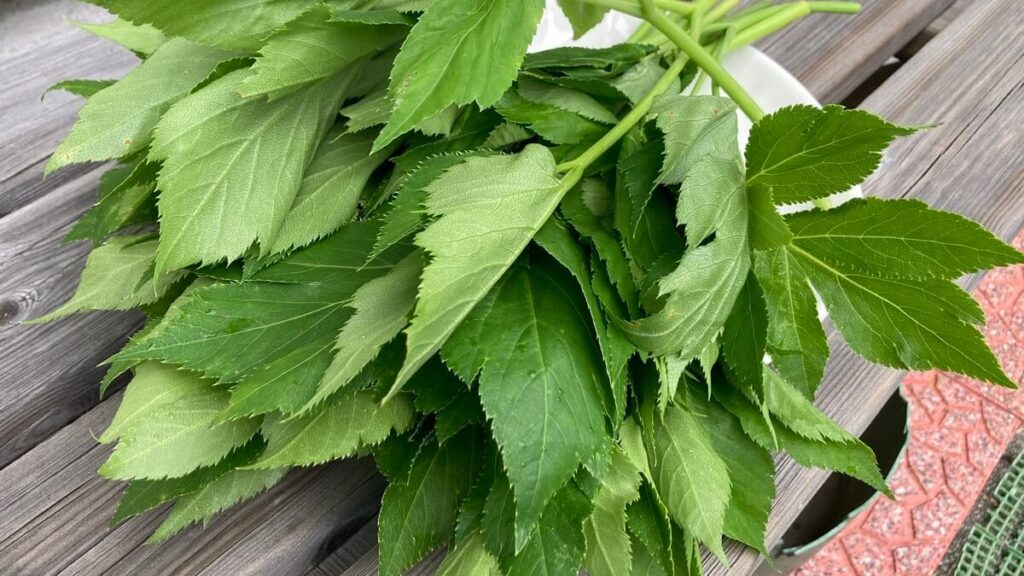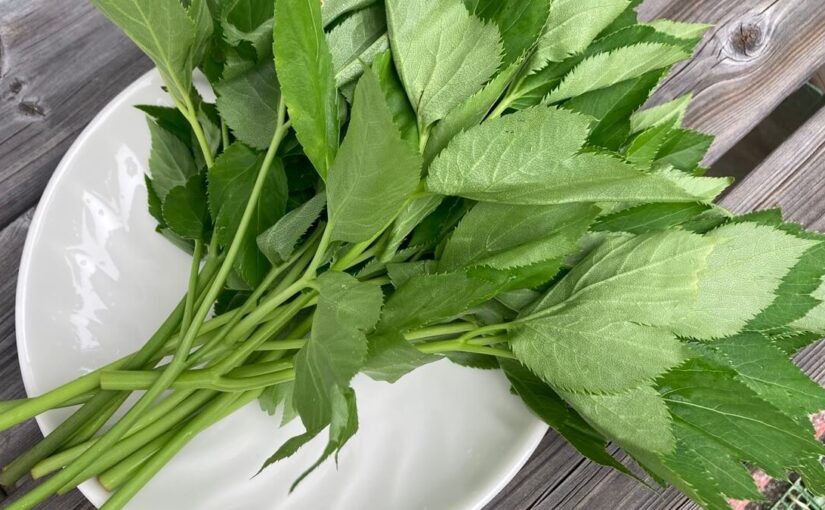
Today, I’d like to take a deeper look into Ashitaba (Angelica keiskei), a perennial herb from the carrot family that is native to Japan.You might wonder, why Ashitaba? For me, it comes down to a physical necessity. There is a specific kind of “wild” bitterness and astringency—what we call egumi in Japanese—found in these early spring greens. Taking that bitterness into my body feels like a vital ritual; it’s the spark that finally wakes my mind and limbs from their long winter slumber. Without it, I feel as though I’m still stuck in the cold, waiting for a spring that hasn’t quite arrived.The name “Ashitaba” literally translates to “Tomorrow’s Leaf.” There is an old saying that if you pick its leaves today, new buds will already be waiting for you by tomorrow. It’s a name that reflects an incredible, tireless vitality—as if the plant is inviting you to take what you need, knowing it has plenty more to give.
The Origin of the Name: A Vitality That Races Against Time
“Pick a leaf today, and a new bud appears tomorrow.”
This is the legend surrounding Ashitaba, a plant that thrives in the rugged, volcanic landscapes of the Izu Islands. Its name is a testament to its incredible pace of growth; it is said to possess such a fierce will to live that new shoots seem to burst forth almost as soon as the old ones are gathered.
You might find yourself wondering: “Wait, can it really grow back overnight?”
In truth, “tomorrow” is a bit of a poetic exaggeration. It generally takes anywhere from a few days to a week for a fresh leaf to fully unfurl. However, during its peak season, some records show that Ashitaba can grow more than 10 centimeters in a single day. In the world of plants, this is truly a “high-speed” evolution.
This rapid growth is more than just a quirk; it is a survival strategy honed by the harsh environment of volcanic islands. When an eruption leaves the land barren and stripped of green, Ashitaba is among the first to strike deep roots. It stretches upward, reaching for the sunlight faster than any other, reclaiming the desolate earth.
Back in the Edo period (1603–1867), people were so moved by this display of resilience that they treasured Ashitaba as a “medicinal herb of perpetual youth and longevity.” It was even chosen as a special gift to be presented to the Shogunate. Knowing that history makes every bite feel like a humble gift from the earth—one we should cherish deeply.
The Golden Sap: “Chalcone”
A Natural Nutrient Born of the Volcano
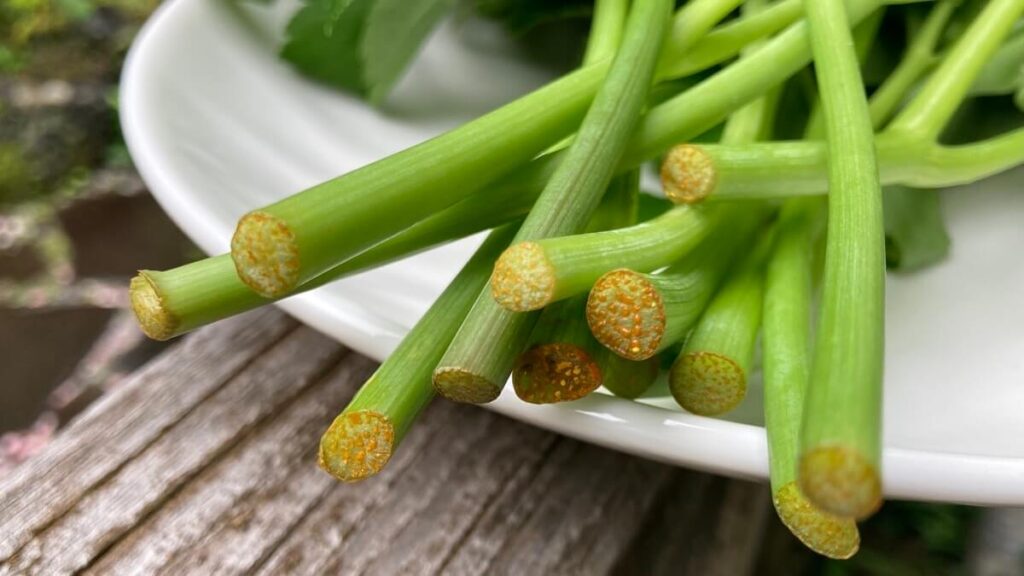

When you harvest Ashitaba, a thick, sticky yellow sap slowly seeps from the cut end of the stem. This isn’t just moisture; it is the very essence of the plant’s resilience. Known as “Chalcone” (specifically xanthoangelol and related compounds), this golden liquid is often called the “source of its life force.”
What makes Chalcone truly remarkable is its rarity. It is almost never found in other plants; it is a nutrient that belongs uniquely to Ashitaba—a “patent” of sorts, granted by nature only to this particular species.
| Potential Benefits | How It Works | Why It Matters |
|---|---|---|
| Inner Flow Support | Promotes smooth circulation and helps the body flush out excess water and waste. | A powerful ally for detox and reducing puffiness. |
| Age-Defying Power | Potent antioxidant properties protect cells from environmental damage. | Supports youthful vitality and anti-aging. |
| Natural Barrier | Contains antibacterial compounds the plant uses to shield itself from insects and microbes. | Strengthens your wellness and natural defenses against external stressors. |
In the past, the people living on these rugged volcanic islands turned to this golden sap as a form of traditional medicine. They would apply it to wounds to aid healing or consume it as a powerful tonic to restore vitality.
A word of caution, though: true to its medicinal strength, that golden Chalcone is incredibly stubborn! If it gets on your skin or clothes while harvesting, it won’t wash off easily. Of course, the “richness” of the sap varies depending on the specific soil it grew in and the season it was picked—nature never produces the exact same thing twice. If you ever have the chance, I encourage you to try and taste the subtle differences for yourself.
The Strongest Ashitaba Grows on Miyakejima Island
While the golden sap known as Chalcone is remarkable, it is the volcanic ash soil of Miyakejima that truly nurtures it to its peak. At first glance, the scorched earth of a volcano might seem inhospitable, but for Ashitaba, this is its “ideal landscape.”
Here are the three reasons why:
1. Breathable Earth: The Ultimate Drainage
When a volcano erupts, it leaves behind layers of scoria—porous, coarse volcanic ash filled with tiny air pockets. This creates exceptional drainage. Since Ashitaba dislikes stagnant moisture and needs its roots to “breathe” deeply, this airy, loose soil is where the plant feels most at ease.
2. Minerals from the Deep: Earth’s Raw Energy
The energy of the volcano delivers fresh nutrients from deep underground. The young soil born from magma is rich in essential minerals like iron and manganese. The robust flavor and potent nutrition of Miyakejima’s Ashitaba are proof that it is drinking deeply from this raw, elemental wealth.
3. Resilience Born from Hardship
There is a paradoxical side to volcanic soil: because it is so porous, nutrients can wash away easily. This “slightly tough” environment triggers a survival instinct in the plant. To protect itself from these lean conditions, Ashitaba concentrates its strength, producing an even richer, thicker flow of that golden Chalcone.
Ways to Serve Ashitaba
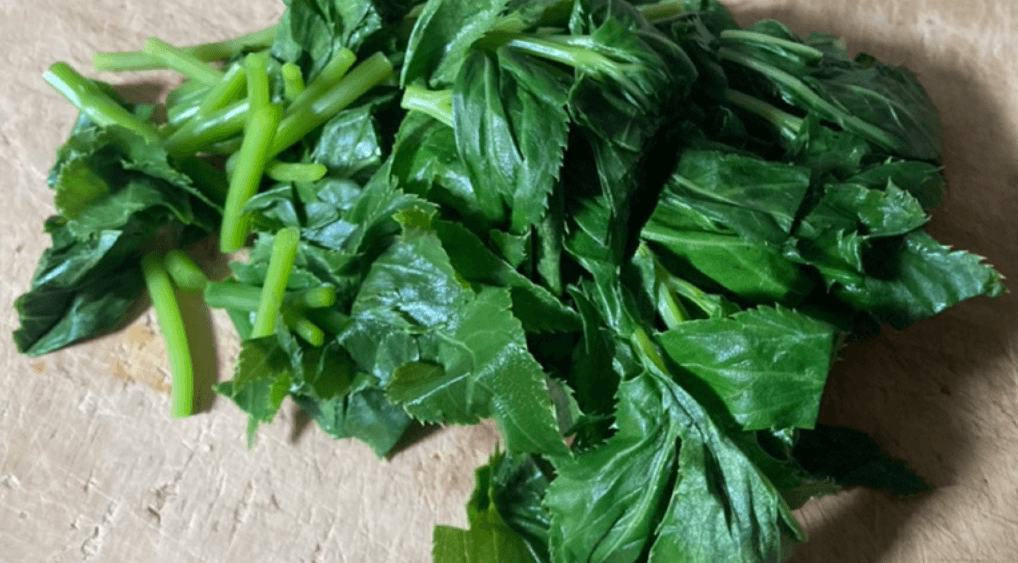
- Fresh & Simple: Yes, you can eat it raw! Stick to the tender tips and young stems for the best texture.
- The “Quick Blanch” Method: A quick dip in salted boiling water followed by a cold rinse makes the color pop! Squeeze well and add your go-to dressing. It’s the perfect healthy side dish.
- Sauteed or Fried: Ashitaba loves oil! Frying or stir-frying brings out a wonderfully mellow flavor. Tempura Ashitaba is a must-try!
【A Side Note】The Akakokko’s Favorite Spot
The Akakokko (Izu Thrush) is a symbolic bird of Miyakejima and a designated National Natural Monument of Japan. Interestingly, these birds are also great fans of the Ashitaba fields.
Because the volcanic soil is so well-maintained for growing Ashitaba, the fields offer an open, clear view of the ground. For the Akakokko, who love to hop along the earth in search of food, these fields are the perfect, most comfortable “outdoor dining spots” on the island.
Closing Thoughts
I hope you enjoyed this journey into the world of Ashitaba.
Through the lens of this remarkable plant, we can see how the fire of the volcano and the resilience of life are so beautifully intertwined.
May you find your own way to enjoy the vibrant energy of the “Tomorrow Leaf.”
| Item | Details | Notes |
|---|---|---|
| Common Name | Ashitaba | Also known as Hachijo-so (Hachijo Grass). |
| Classification | Apiaceae Family (Angelica genus) | Related to parsley, celery, and cilantro; shares their aromatic qualities. |
| Main Origins | Izu Islands (Miyakejima, Hachijojima, etc.) | Thrives naturally and is cultivated in rich volcanic ash soil. |
| Best Season | February to May (Spring) | The young shoots are at their softest and most flavorful. |
| Key Feature | The Golden Sap: “Chalcone” | A rare, yellow liquid that seeps from the stem when cut. |
| Flavor Profile | A distinct bitterness and refreshing aroma | When fried as tempura, the bitterness mellows and becomes quite savory. |
| Flower Language | “Vibrant Vitality” | A symbol of the “Tomorrow Leaf” that never stops growing. |