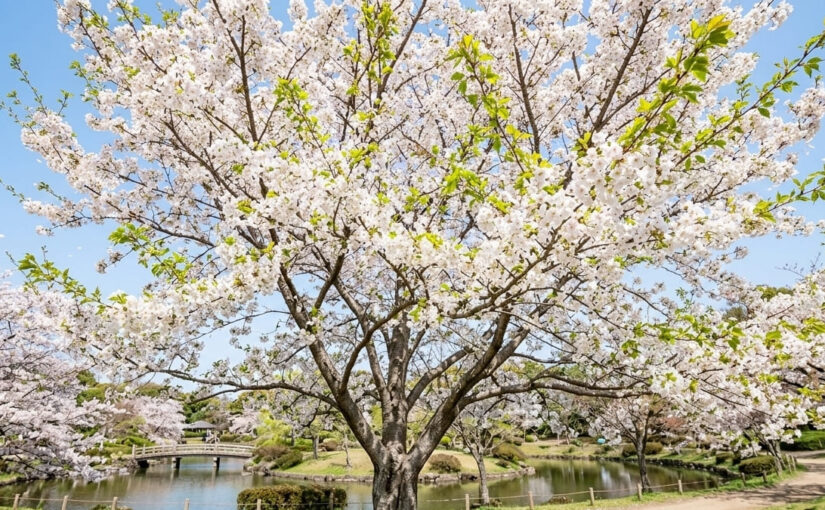
“Haru” — Spring.
It is a word that leaps out from the hushed, monochrome stillness of winter. More than just a change in temperature, Haru is a transformation; it recalibrates the world, painting every corner of our surroundings with new light and drifting scents. It even has the power to shift the landscape of our inner selves.
But what are the words that belong only to this fleeting moment? What are the expressions we can only encounter when the earth begins to breathe again?
Sakura: The Heart of Spring
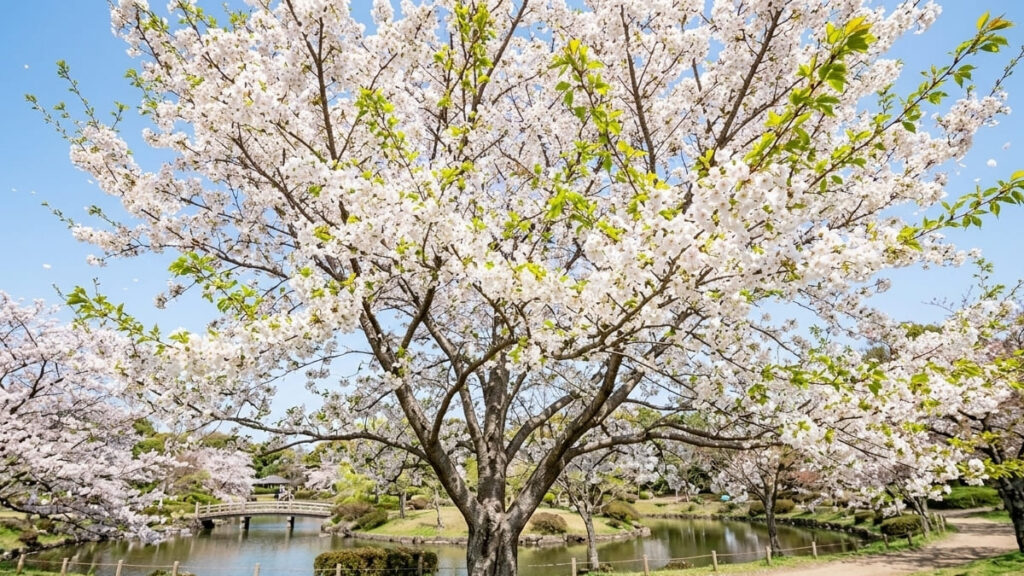
Within the vast vocabulary of Sakura (cherry blossoms), three particular expressions stand out. They describe not just the flowers themselves, but the subtle chemistry between the blossoms, the sky, and the light.
Hanagumori (Flower Haze)
This refers to the pale, pearly white sky often seen when the cherries are in full bloom.
While a crisp blue sky is beautiful, there is a unique gentleness to blossoms viewed under a milky, overcast veil. In this light, the boundaries between the petals and the air seem to melt away. In the cool, quiet air, one can appreciate the flowers without distraction. It is a humble, composed face of spring—one that feels quintessentially Japanese.
> There is a certain kindness in this soft light that you just don’t find on a piercingly sunny day.
Sakura-ame (Cherry Blossom Rain)
Rain falling during the peak of the bloom.
We often feel a pinch of regret when rain arrives just as the flowers open, but this word changes the scenery entirely. The rain-soaked petals become translucent and fragile, and the sight of fallen petals flowing along the ground creates a fleeting beauty that only exists in this moment.
> Though it feels a bit sad to see the petals fall, the rain brings its own magic. The wet bark of the trees turns dark and deep, making the contrast with the pale flowers even more breathtaking.
Hana-akari (Flower Light)
The phenomenon where a mass of cherry blossoms appears to glow with its own soft light, illuminating the darkness of night.
Even without a streetlamp, the area beneath a cherry tree feels dimly lit, as if the flowers themselves are exhaling a gentle radiance.
> It feels as though the moonlight has been caught by the petals, gathering there to guide us through the shadows.
Fuji: The Heart of Spring
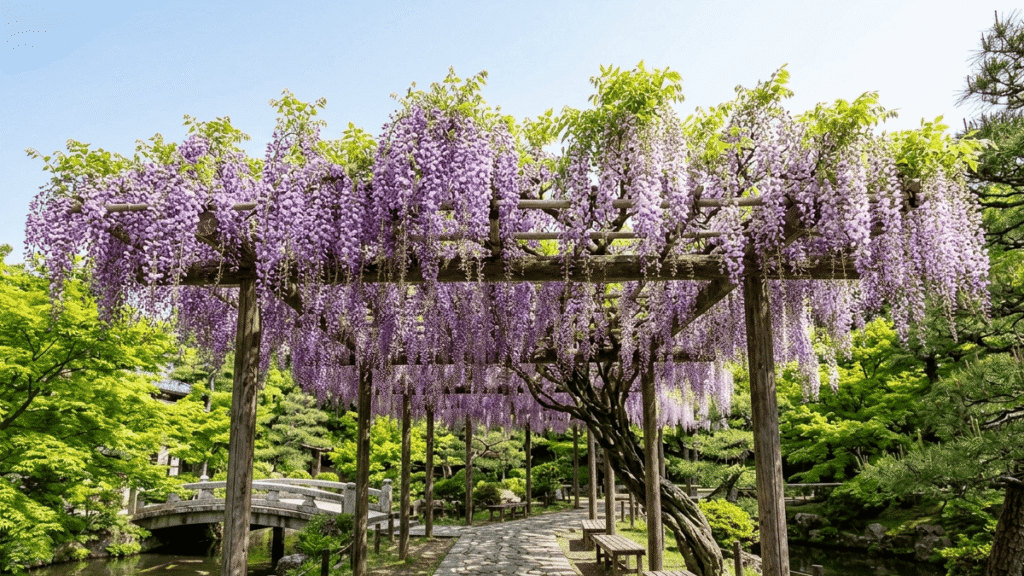
I found a few beautiful expressions related to “Wisteria.” Out of those, I’d like to share two that really stuck with me.
“Sow the cotton seeds when the wisteria blooms” (Fuji no hana mite wata wo make)
This is an old Japanese agricultural proverb. It tells farmers that when the wisteria starts to bloom, it’s the perfect timing to sow cotton seeds.
Back in the day, wisteria trellises were often built right next to rice paddies or in spots overlooking the fields. Farmers would place them there so they could check the timing of their work at a glance. Those trellises also served as a cool, shaded spot to take a break—I can just imagine them enjoying their lunch under the flowers!
Also, the way long, lush wisteria clusters hang down was seen as a symbol of “heavy ears of rice.” Because of this, the flowers were used as an indicator to predict a bountiful harvest for the year!
Fujinami (Wisteria Waves)
This is a poetic term describing wisteria clusters swaying in the wind, looking just like rippling waves. It’s a compound word that has been loved in Waka (traditional Japanese poetry) since ancient times.
The white parts of the flowers give off this beautiful shimmer… it honestly looks so mystical, like you’re looking up from under the sea!
Ume (Plum Blossom)
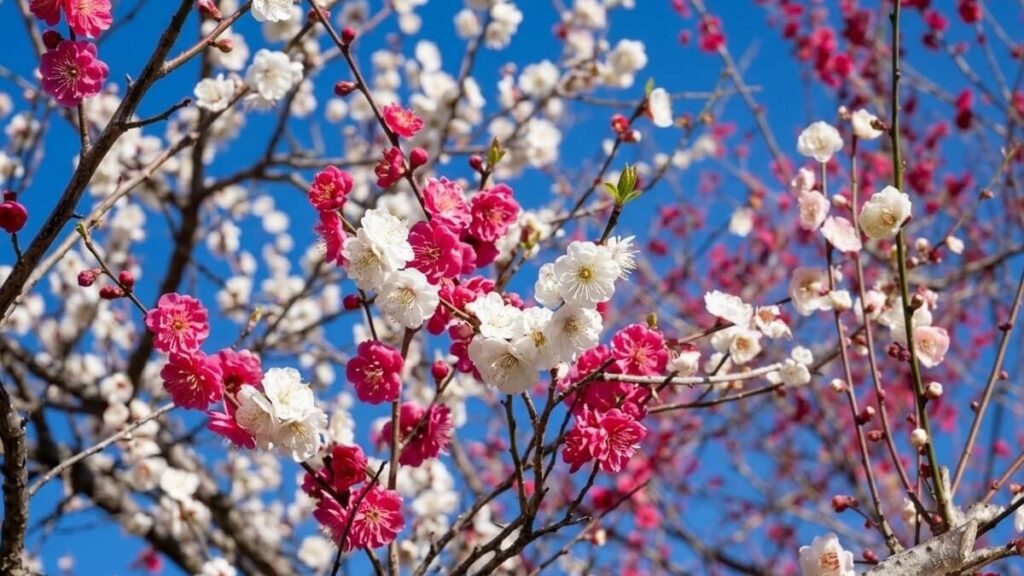
I came across several phrases related to “Ume.” Here are three that particularly left an impression on me.
Plum blossoms and nightingales
“Plum blossoms and nightingales” is synonymous with “good combinations.” In Edo-period senryu (humorous haiku), this is often followed by “bonito and mustard.”
Placing the elegant scenery with the common people’s food of the time—the first bonito of the season—is a typical Edo-style humor. At the time, eating bonito with mustard, which had a pungent kick, rather than the then-luxury wasabi, was considered the most sophisticated style. This phrase conveys the rich sensibilities of the Edo period, enjoying the aesthetics of spring and the flavors of the season together.
Plum blossoms are swelling
“Plum blossoms are swelling” is a seasonal expression that describes early spring (around February). It refers to the appearance of plum blossoms swelling and about to bloom.
“Fufumu” is an archaic form of “fukumu,” and describes the moment when the buds begin to open.
—Seeing the plum blossoms swelling instantly relieves tension and makes me look forward to spring. This is surely proof that I’m getting energy from “plum blossoms swelling” (Yay!).
Plum blossoms ward off misfortune for the day.
The power of plums is believed to help improve health and ward off illness. The ancient folk tale that “plums ward off evil” has been a part of ordinary people’s lives for centuries. Pickled plums seem to have become a common food item on ordinary people’s tables during the Edo period. It is said that the preparation method is almost the same as it is today.